Westpac Rescue Helicopter Service
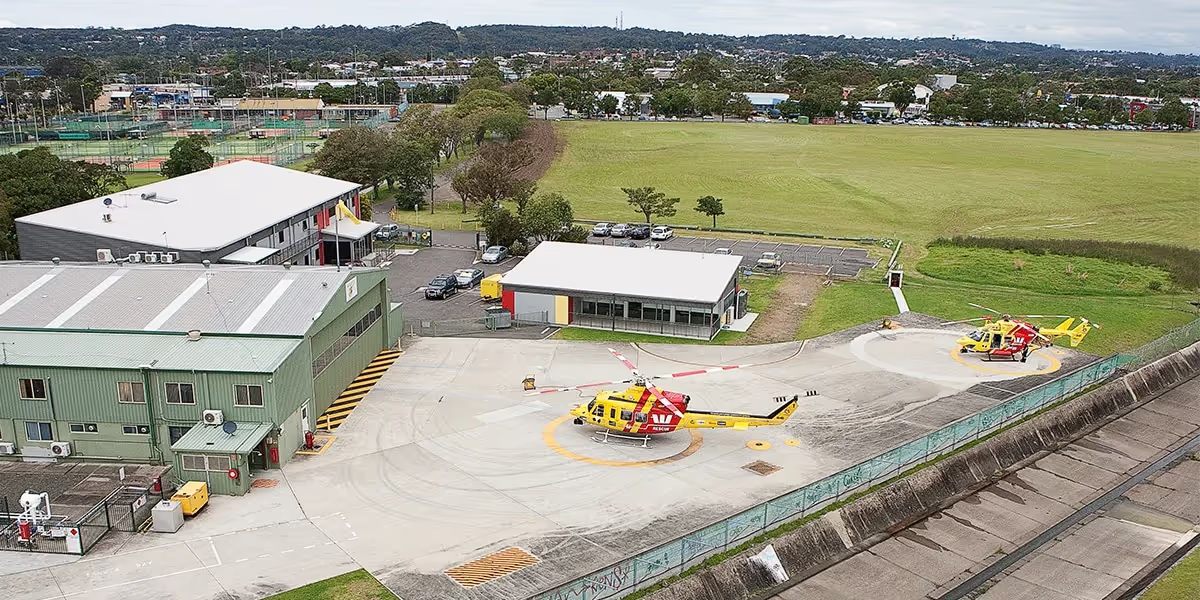

Westpac Rescue Helicopter Service strengthened its environmental performance through carbon management, renewable energy and energy efficiency initiatives across its NSW operations.
Date Published: 03/2015
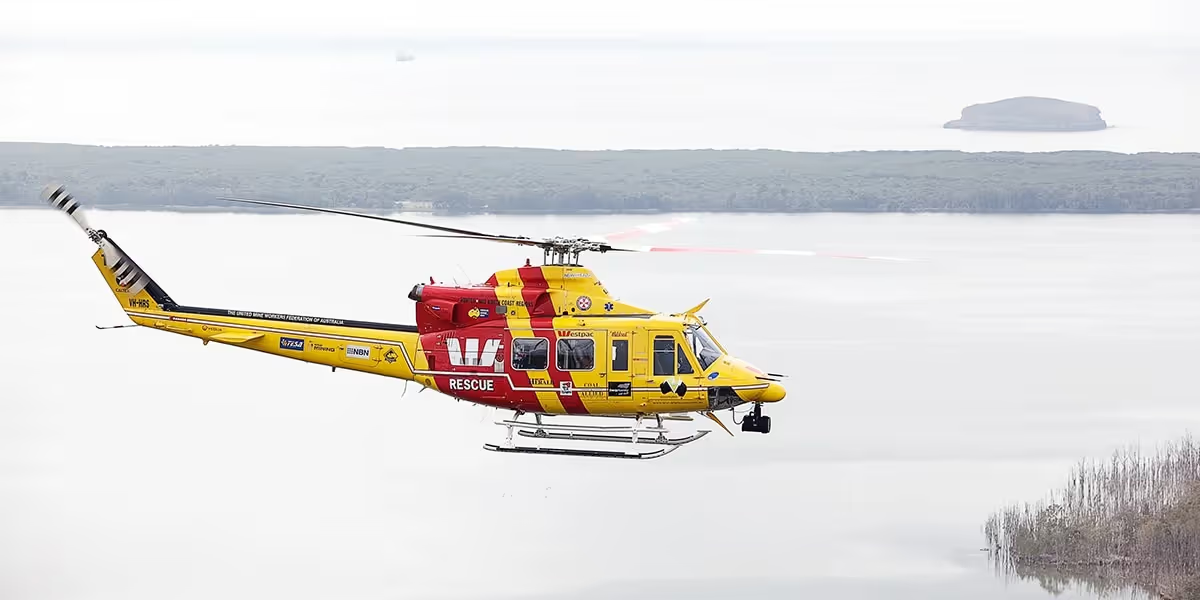
The Westpac Rescue Helicopter Service conducts more than 1,400 rescue missions each year across regional New South Wales. The service operates four twin-engine, single-pilot, all-weather helicopters maintained by highly skilled aircraft engineers. No passenger has ever paid to be airlifted during an emergency. As part of the Surf Life Saving Association, the service relies on ongoing community support while delivering critical emergency response services.
The Westpac Rescue Helicopter Service covers the Hunter, New England North West, Central Coast and Mid North Coast regions of New South Wales. This service area spans approximately 132,000 square kilometres and supports a population of around 1.2 million people. The organisation operates dedicated bases at Broadmeadow (Newcastle) and Tamworth, each featuring hangar and engineering facilities, refuelling and maintenance infrastructure, crew accommodation and administrative offices.
Sustainability Drivers
The organisation identified three key drivers for improving environmental performance:
- Meeting client expectations, including those of NSW Health and NSW Ambulance.
- Identifying operational cost savings through energy efficiency.
- Demonstrating environmental responsibility as a community organisation.
Client Expectations
NSW Health and NSW Ambulance are important clients of the service. To remain competitive when tendering for contracts, the organisation needed to demonstrate a credible sustainability strategy supported by measurable actions.
Cost Efficiency
The management team sought opportunities to reduce operating costs through improved energy efficiency while meeting the expectations of government stakeholders and funding partners.
Community Responsibility
The organisation was committed to reducing its environmental impact and leading by example within the communities it serves.
Environmental Management and Compliance
The Westpac Rescue Helicopter Service has undertaken a range of environmental initiatives, including:
- Achieving AS/NZS ISO 14001 Environmental Management Systems certification in December 2011.
- Conducting annual greenhouse gas assessments to ISO 14064-1 since 2008.
- Undertaking energy audits to AS/NZS 3598 in 2008 and 2012.
Sustainability Initiatives
Measuring Emissions
Pangolin calculates the organisation's greenhouse gas emissions annually, enabling the service to understand and manage the environmental impacts associated with its ground operations.
Carbon Offsetting
In addition to reducing emissions, the organisation offsets ground operation emissions through certified carbon credits that support renewable energy projects, including wind and solar. Pangolin Associates manages the purchase and retirement of carbon credits on behalf of the service.
Waste and Water Efficiency
The service has implemented several practical sustainability initiatives, including:
- Waste separation and recycling programs.
- Rainwater collection for aircraft and vehicle cleaning.
- Greywater reuse for toilets and washing machines.
Energy Efficiency
The organisation has undertaken a range of energy-saving measures, including:
- Removing unnecessary fluorescent and downlights across facilities.
- Installing ceiling fans to reduce reliance on air conditioning.
- Installing push-button switches on high-bay lighting in operational hangars.
- Introducing more fuel-efficient diesel and LPG vehicles.
- Replacing older appliances with energy-efficient alternatives.
In July 2012, Pangolin completed an Energy Audit that identified additional opportunities to reduce both energy consumption and operating costs.
Renewable Energy
In January 2012, the Westpac Rescue Helicopter Service installed a 24 kW solar photovoltaic system. Following Pangolin's recommendations, the organisation also investigated the feasibility of an additional 12 kW solar installation to further reduce reliance on grid electricity.
Future Initiatives
Electricity
Future initiatives include:
- Increasing lighting controls to enable more areas to be switched off when not required.
- Replacing halogen lighting with energy-efficient LED technology.
- Reviewing heating, ventilation and air conditioning systems for further efficiency opportunities.
Fuel
The organisation continues to monitor developments in biofuels and assess their suitability for future aircraft operations.
Paper Reduction
To reduce paper consumption and transport costs, the service began transitioning newsletters online and investigating digital alternatives for operational forms and daily inspections, including the use of iPads.
The Westpac Rescue Helicopter Service has benefited from our association with Pangolin Associates in gaining valuable assistance on improving Energy Efficiencies and completion of greenhouse gas audits. The team at Pangolin is responsive to our needs and has a great network of subject matter experts that have assisted us and provided us with advice in all areas of environmental management.
Rob Jenkins
Rob Jenkins - Safety Manager, Westpac Rescue Helicopter
Request a call back
We welcome your enquiries about sustainability and carbon management.
Follow us on LinkedIn





























.avif)














Industry Expertise, Shaped by Real-World Experience