Griffith University
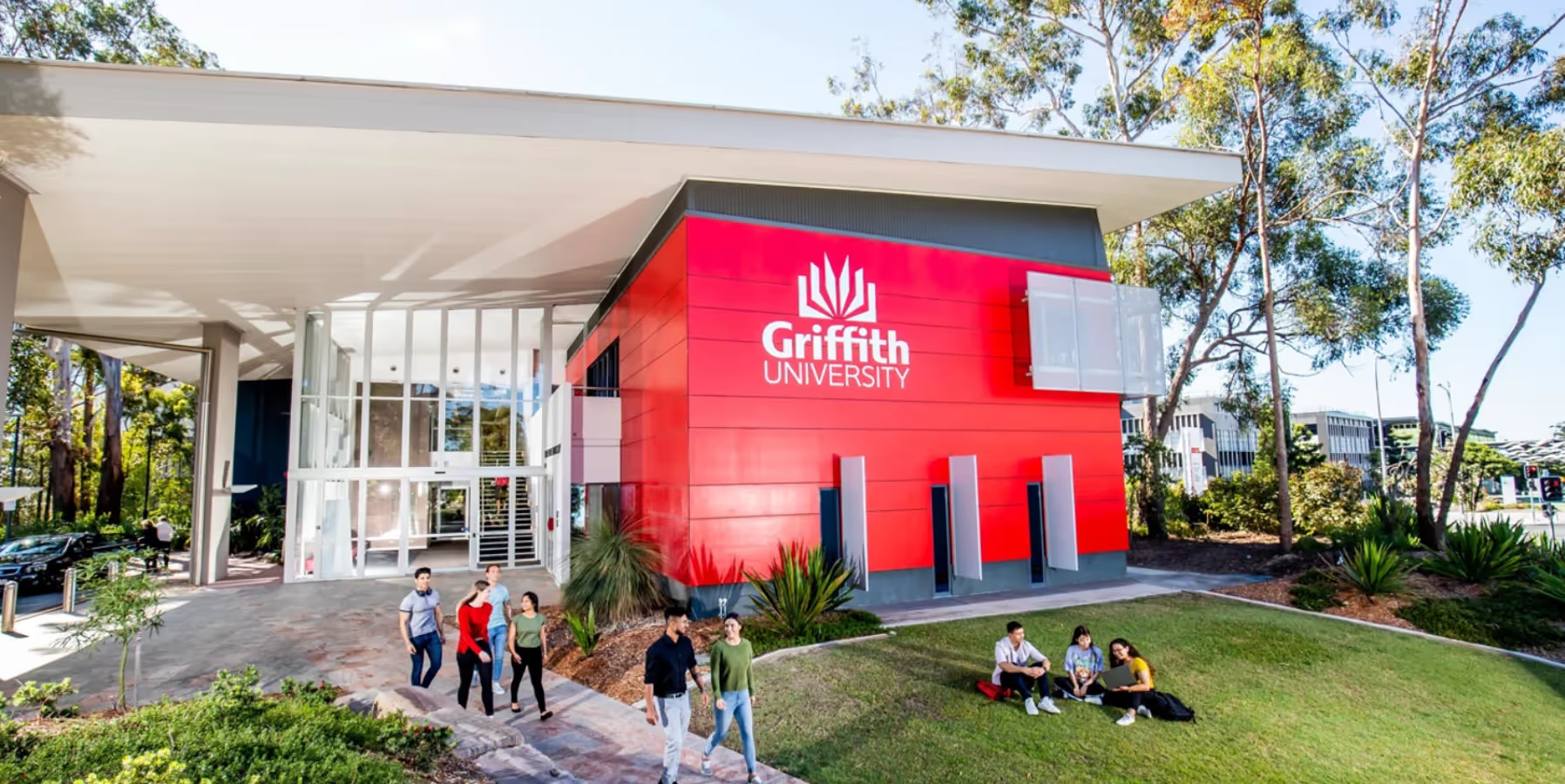

Griffith University recognised early action as an opportunity, partnering with Pangolin to deliver an executive ASRS and AASB S2 workshop that strengthened climate governance, and prepared leaders for future climate reporting requirements.
Date Published: 11/2025
Griffith University is one of Australia’s leading universities, with a strong focus on sustainability, research and community impact. While universities are not yet mandated under Australia’s mandatory climate-related financial disclosure requirements, the Queensland Government has signalled that public entities will need to align with frameworks similar to the Australian Sustainability Reporting Standards (ASRS) and AASB S2.
In anticipation of future requirements, Griffith identified early action as an opportunity to maintain its leadership position in the climate space. Recognising that the emerging reporting regime will require new capabilities, including long-term climate scenario analysis, supply chain (Scope 3) assessment, and disclosure of climate-related risks and opportunities, the university prioritised building cross-organisational awareness and alignment before determining its approach.
The Role of Pangolin Associates
Pangolin Associates has partnered with Griffith University for over a decade, supporting National Greenhouse and Energy Reporting (NGER) obligations and carbon measurement. To address the emerging AASB S2 landscape, Pangolin designed and delivered a tailored Executive Education and Exploration Workshop. The workshop brought together senior leaders from across the university, including finance, risk, sustainability and campus operations, to build a shared understanding of Griffith’s position, risk appetite and potential pathways forward.
Workshop Structure
The workshop was structured around three core elements:
1. Introduction to Climate Reporting Legislation and Standards
- Overview of ASRS and AASB S2 requirements and their alignment with the International Sustainability Standards Board.
- Insights into New South Wales Government mandated reporting and implications for Queensland.
- Summary of relevant legislation, including AASB S2, ASIC guidance, and auditing standards ASSA 5000 and 5010.
- Discussion of director responsibilities, liability considerations and regulatory expectations around greenwashing.
2. Climate Reporting in the Context of Griffith University
- Key differences between private and public sector obligations, and Queensland’s policy direction.
- Overview of the Queensland Climate Adaptation Strategy and relevant sector adaptation plans for higher education.
- Review of current practices across Australian universities in greenhouse gas reporting, decarbonisation and risk management.
- Consideration of Griffith’s own contributions, including its role in developing the Climate Risk Management Guideline for Queensland Government departments.
3. Exploration of Capabilities, Implementation and Next Steps
- Examination of key challenges associated with AASB S2, including forward-looking scenario analysis, value chain disclosures, and auditable processes.
- Discussion of potential reporting approaches, ranging from baseline compliance to more progressive strategies.
- Introduction to climate-related risks and opportunities and approaches to materiality assessment.
- Overview of climate scenario analysis and potential financial impacts.
- Consideration of governance structures, capability requirements and resource implications.
Outcomes for Griffith University
The workshop delivered several tangible outcomes:
- Shared understanding: Leaders across disciplines developed a clear understanding of Australia’s climate reporting landscape and its implications for Griffith.
- Cross-functional alignment: Finance, risk, sustainability and operational teams engaged in a coordinated discussion on organisational impacts and opportunities.
- Clarity on governance: Participants explored governance structures, including the role of audit and risk committees, and began to define Griffith’s preferred reporting approach.
- Defined next steps: The university identified priority actions, including assessing climate-related risks and opportunities, engaging with sector initiatives and planning for resourcing requirements.
The workshop provided more than an executive briefing. It enabled strategic exploration and alignment, helping Griffith understand how mandatory climate reporting will apply in practice and how best to respond. Following the 2025 workshop, Pangolin was re-engaged from March-June 2026 to run a gap assessment and articulate a fully costed implementation roadmap for Griffith University, paving the way for next step value-based funding, mobilisation and early preparation activities
Value of Early Action
Early engagement has strengthened Griffith’s preparedness and positioned the university to respond confidently as requirements evolve. The insights gained also provide a useful reference point for other institutions facing similar challenges. By taking action now, organisations can reduce risk, build capability and identify opportunities ahead of mandatory reporting obligations. Griffith’s approach demonstrates the value of building awareness, aligning stakeholders and establishing a clear pathway forward.
Griffith University worked with Pangolin Associates to navigate the evolving climate reporting landscape with clarity and confidence. Pangolin’s tailored executive workshop built cross-functional understanding, aligned our leadership team, and provided practical next steps – strengthening Griffith’s position as a leader in sustainability and climate resilience.

Jennifer Boddy
Jennifer Boddy, Dean of Sustainability and Rankings at Griffith University
Request a call back
We welcome your enquiries about sustainability and carbon management.
Follow us on LinkedIn






























.avif)















Industry Expertise, Shaped by Real-World Experience