Vehicle Fleet Transition
Service Overview
We help organisations develop and implement practical fleet electrification and decarbonisation strategies, combining fleet, energy and financial expertise to reduce emissions, manage transition risk and build a strong business case for change.

Typical Activities
- Assessing fleet composition, utilisation and operational needs
- Prioritising vehicles and planning staged fleet transitions
- Assessing smart charging, onsite energy and energy procurement requirements
- Developing TCO, NPC and financial models
- Identifying grants, financing and procurement opportunities
- Supporting implementation, tendering and AASB S2 reporting
Our independent, evidence-based approach helps organisations understand which vehicles to electrify first, when to transition them, and where electrification or fuel alternatives can deliver the strongest operational and commercial value.
Building a Practical Pathway to Fleet Decarbonisation
Vehicle fleets can represent both a significant operating expense and a major source of Scope 1 emissions, making fleet decarbonisation an important opportunity for organisations to reduce emissions while improving long-term operational performance. For organisations that outsource transport and logistics, fleet emissions can also contribute to Scope 3 emissions, making supplier engagement and procurement an important part of the transition.
Fleet electrification is not simply a matter of replacing internal combustion engine (ICE) vehicles with electric alternatives. Vehicle selection, operational requirements, charging infrastructure, energy supply, maintenance, financing and procurement all need to work together. Heavy fleet requirements are even more challenging where alternative low-carbon fuels and hydrogen-based energy options need to be considered and evaluated.
We provide independent, evidence-based advice tailored to how each fleet operates, helping organisations identify where electrification can deliver the greatest value and where alternative approaches may be required.
Understanding Your Fleet & Electrification Opportunities
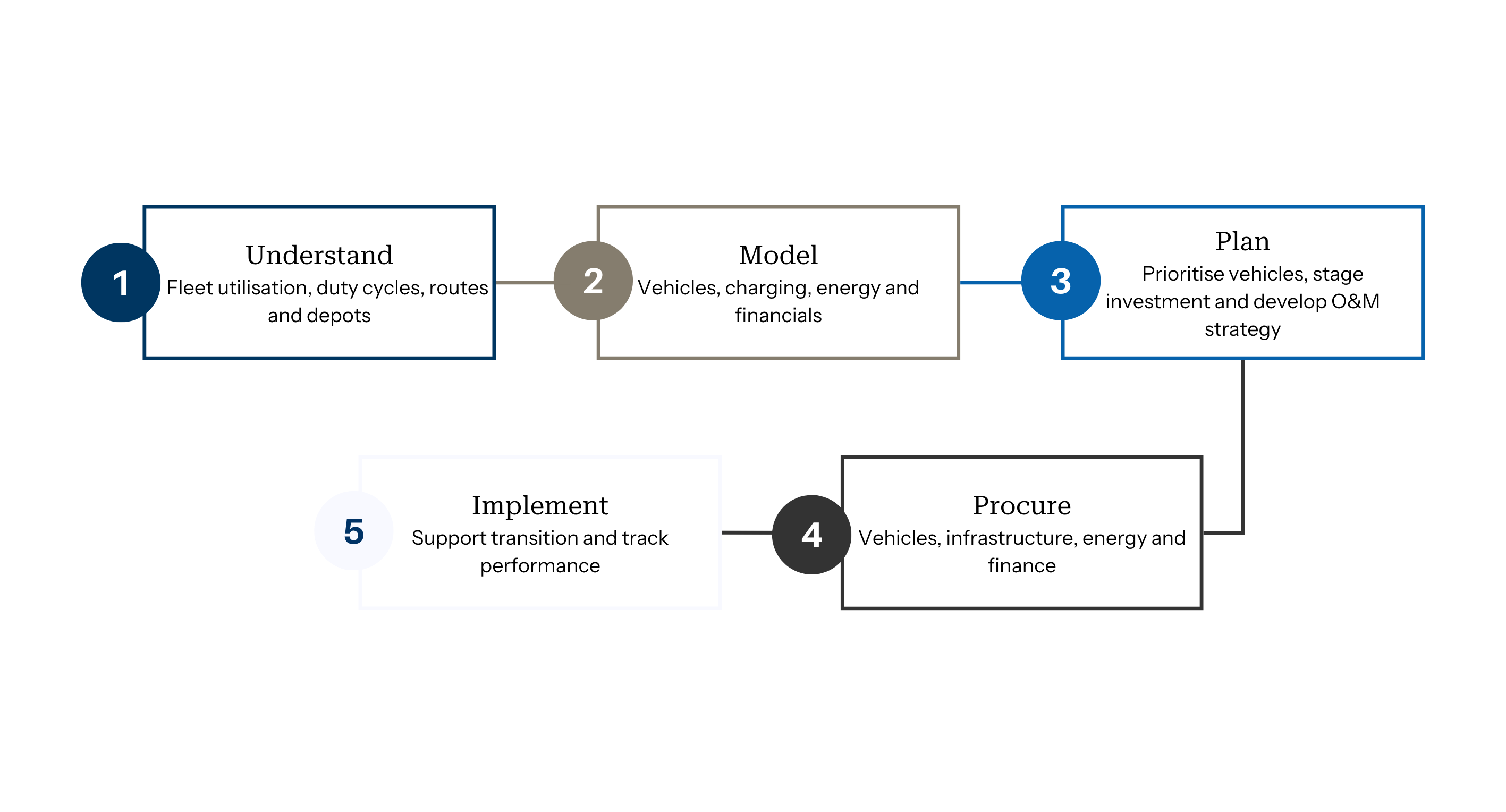
Successful fleet electrification starts with understanding how vehicles are actually used. We assess fleet composition, utilisation, duty cycles, routes, depots, dwell times, maintenance, and operational requirements to determine which vehicles are suitable for electrification and when they should transition.
Our work spans passenger and light commercial vehicles through to rigid and articulated fleets. This operational analysis helps define vehicle and charging requirements while avoiding unnecessary investment or changes that could compromise fleet performance.
Building the Business Case for Fleet Electrification
We use total cost of ownership (TCO) analysis, Net Present Cost (NPC) and other financial modelling approaches to assess the commercial implications of different fleet transition pathways. This can include vehicle costs, fuel and electricity, maintenance, depreciation, charging infrastructure and future emissions exposure.
We also consider the wider energy requirements of electrification, including network capacity, onsite solar, battery energy storage systems, smart charging and energy procurement. Bringing these factors into an integrated model helps organisations make more informed capital allocation decisions.

Fleet Electrification Procurement & Implementation
Once a pathway is established, we help translate the strategy into an integrated fleet solution across vehicles, charging, energy and finance. Our support can include identifying grants and incentives, assessing financing and delivery models, developing technical requirements, managing competitive tenders and evaluating potential providers.
For outsourced transport and logistics, we can also support procurement and supplier engagement to incorporate emissions reduction objectives into contracts and tender requirements.
Managing the Operational Transition
Moving to an electric fleet can require changes beyond vehicles and charging infrastructure. We help organisations consider operating procedures, driver behaviour, maintenance practices and internal policies as part of implementation. A staged transition also provides an opportunity to test assumptions, learn from early deployments and adapt as technology and operational requirements evolve.
Fleet Decarbonisation & AASB S2 Reporting
Fleet electrification can support Scope 1 emissions reduction and broader net zero targets. Where transport and logistics are outsourced, procurement and supplier engagement can also help address Scope 3 emissions. For organisations reporting under AASB S2, fleet transition analysis can also provide useful information on climate-related transition risks, opportunities, financial impacts and emissions reduction initiatives.
Turning Your Fleet Electrification Strategy Into Action
We provide independent, evidence-based advice across fleet analysis, financial modelling, energy, procurement and implementation to help organisations move from fleet strategy to an actionable transition pathway.
General Questions
Request a call back
We welcome your enquiries about sustainability and carbon management.
Follow us on LinkedIn


Industry Expertise, Shaped by Real-World Experience